

Shopify Storefront MCP
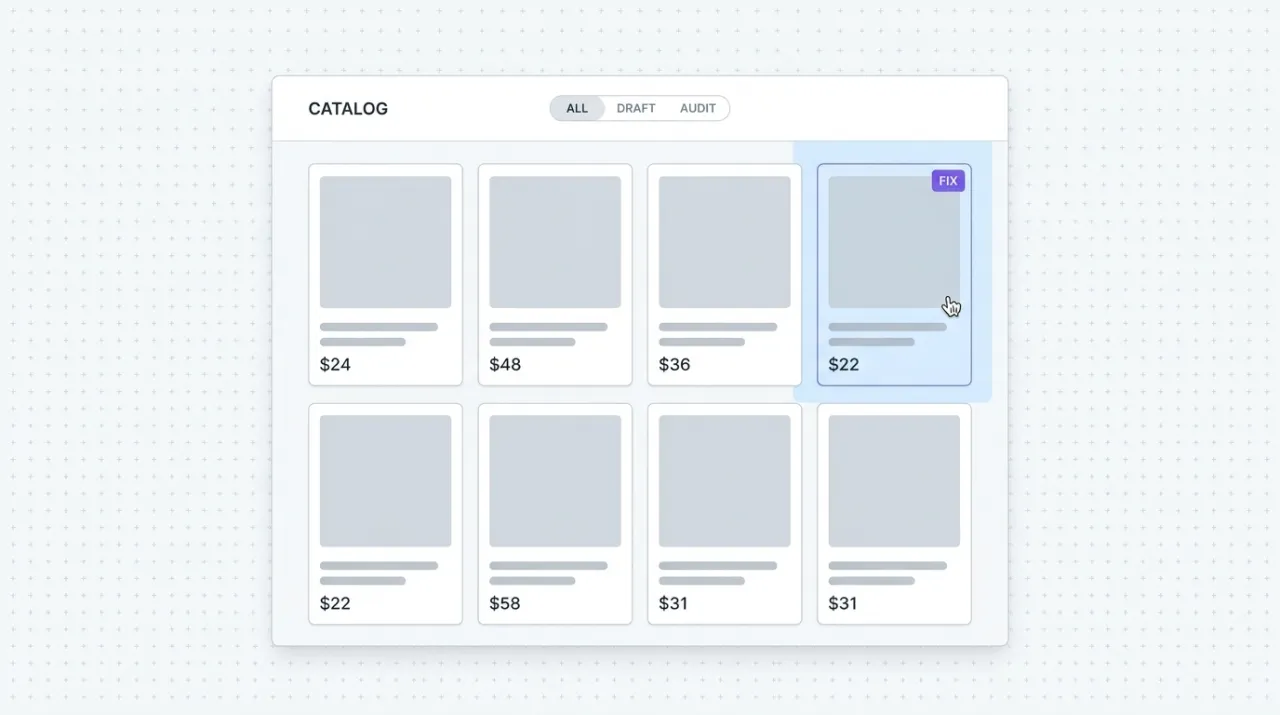
Shopify's official Storefront MCP at /api/mcp gives Claude cart-building, checkout-link generation, and store-policy lookup for any store on the platform. Catalog search lives on a separate UCP endpoint that needs a developer-track setup.
Install Shopify Storefront MCP and Claude can:
- → Build and modify Shopify carts from a Claude conversation (update_cart)
- → Return Shopify checkout links a shopper can complete in their browser (get_cart)
- → Read store policies (shipping, returns, FAQs) to answer pre-purchase questions accurately (search_shop_policies_and_faqs)
- → Install in one paste with no API token, no app authorization, and no developer setup
Shopify maintains it. It is free. One install, then Claude has hands on the open web.
What you can do once it is installed
Build a cart from a shopper's brief and hand back a Shopify checkout link the shopper can complete in their browser. Read the store's shipping and returns policies and answer pre-purchase questions in the brand voice. Modify cart contents based on shopper feedback before the checkout handoff. The cart-and-policy layer of a conversational commerce experience now installs in one paste, with no API token to manage and no app to authorize.
Add Shopify Storefront MCP as a custom connector
Open Claude Cowork. Choose Customize, then Connectors, then click the + next to Connectors. Paste these two values into the Add custom connector modal:
Name
Shopify Storefront Remote MCP server URL
https://{your-store}.myshopify.com/api/mcp No auth required. Replace {your-store} in the URL with your shop's myshopify.com subdomain (the part before .myshopify.com in your admin URL). The /api/mcp endpoint exposes three tools: get_cart, update_cart, and search_shop_policies_and_faqs. Catalog search (product search, lookup, and detail) migrated to a separate endpoint at /api/ucp/mcp in April 2026 and now requires registering a UCP agent profile and sending it with every request; that path is a developer-track setup outside the scope of this Cowork custom-connector install. Some stores may restrict access — test against your target store before promising the feature to a client.
First time installing an MCP in Cowork? Full walkthroughPrefer Claude Code or want the source?
Claude Code install
Starter prompts
Copy any of these into Claude after you install Shopify Storefront MCP to see it in action. Each prompt is generic enough to work in any workspace.
Build a starter cart from a shopper's brief and hand back a checkout link
Use the Shopify Storefront MCP. Take this shopper brief: '{paste shopper request}'. Build a cart that matches the brief using product IDs I will provide (or product slugs from the store). Add the items with update_cart, retrieve the cart and checkout URL with get_cart, and return the checkout link plus a one-sentence summary of what is in the cart and the total.
Iterate a cart based on shopper feedback before checkout
I have an existing Shopify cart with cart_id '{paste cart id}'. The shopper said: '{paste feedback}'. Use update_cart to apply the changes (add items, change quantities, remove items by setting quantity to zero). Then call get_cart and return the updated checkout link and a one-sentence summary of what changed.
Answer a shipping or returns question from a hypothetical shopper
Use the Shopify Storefront MCP to call search_shop_policies_and_faqs and read the store's shipping and returns policies. Then act as the brand's AI support assistant and answer this shopper question in the brand voice: '{paste shopper question}'. Cite which policy section your answer is drawn from so a human can verify before sending.
What this MCP does
An MCP (Model Context Protocol server) is a packaged add-on that gives Claude new abilities. Install one and Claude can use it from then on. Shopify Storefront MCP is the official, public, per-store endpoint at your-store.myshopify.com/api/mcp where the subdomain is your specific shop. No authentication, no token to rotate. The endpoint exposes three tools: get_cart (retrieve cart contents and the Shopify checkout URL), update_cart (add items, change quantities, or remove items by setting quantity to zero), and search_shop_policies_and_faqs (read the store's shipping, returns, and FAQ pages). Catalog search (product search, product lookup, and product detail) lives on a separate endpoint at /api/ucp/mcp and requires registering a UCP agent profile and sending it with every request, a developer-track setup that is not accessible from a one-paste Cowork install. The Storefront MCP at /api/mcp is the right entry point for cart-building, checkout handoff, and policy-driven pre-purchase support.
The four jobs it does best:
Cart management with one tool call
update_cart adds items, changes quantities, or removes items by setting quantity to zero. The cart layer of an AI shopping assistant now responds to natural-language instructions, with one Shopify tool doing the work of three or four UI clicks.
Checkout link generation
get_cart returns cart contents and a Shopify checkout URL the shopper can complete in their browser. The bridge between an AI conversation and a real Shopify transaction without requiring authenticated customer accounts.
Policy and FAQ reading for support answers
search_shop_policies_and_faqs reads the store's shipping, returns, and FAQ pages into the conversation so AI support assistants can answer pre-purchase questions accurately. Useful for cart-stage support, returns clarifications, and shipping-speed questions.
Public per-store endpoint, no auth setup
Paste the URL into the Cowork custom-connector modal, replace the subdomain with your shop's myshopify.com subdomain, and you are connected. No app install, no OAuth flow, no API token to manage. One of the lowest-friction installs in the library.
Who it is for
- • Ecommerce founders and operators on Shopify: the entry point for cart-and-policy AI assistants on your store. Build a conversational cart-builder or pre-purchase support assistant without writing any code.
- • Agencies and consultants building Cowork-driven workflows on Shopify: prototype AI cart and policy flows inside a development store before committing to a build. The fastest path from idea to working demo for the cart-and-policy slice.
- • Product and brand teams evaluating conversational commerce: test how a Claude conversation handles cart-building and policy questions against your real store before scoping a deeper build.
- • Skip if: you need catalog search or product discovery from a one-paste install. Those tools live on /api/ucp/mcp and require registering a UCP agent profile, which is a developer-track setup. Also skip if you need authenticated customer-account data (order history, account management) — those use the Customer Account MCP with OAuth and PKCE — or write access to orders, inventory, or products, which goes through the Shopify Admin GraphQL API with a properly scoped app.
Ways marketers and operators use Shopify Storefront MCP
16 ways the same tool shows up across content, research, lead gen, and quality assurance work.
Cart-building and checkout handoff
- • Build a starter cart from a shopper's brief or multi-product request
- • Adjust cart contents (quantities, removals) based on shopper feedback
- • Bundle complementary items into a single cart for a curated outfit, room, or gift set
- • Hand back a Shopify checkout link the shopper can complete in their browser
Pre-purchase support and policy answers
- • Answer shipping speed, returns, and warranty questions from the store's actual policies
- • Pull store FAQs to answer common pre-purchase questions without sending shoppers to a help center
- • Cite which policy section an answer is drawn from so a human can verify before sending
- • Act as a first-line AI support layer that escalates anything outside its scope to a human
Conversational commerce prototyping
- • Prototype AI cart-building flows on a real store before committing to a custom build
- • Test brand-voice consistency in AI cart and policy interactions
- • Build a working demo for stakeholders to evaluate conversational commerce concepts
- • Benchmark cart-and-policy AI quality against the current on-site support and cart experience
Implementation and handoff
- • Integrate Cowork-driven cart-building into a broader marketing or support workflow
- • Pair cart actions with policy answers to handle the full pre-purchase conversation
- • Hand off finished carts to the standard Shopify checkout flow without engineering work
- • Validate policy answers across multiple regions and SKUs before rolling out as a support layer
For teams running this at scale
Catalog search at scale requires registering a UCP (Universal Commerce Protocol) agent profile and using either the per-store /api/ucp/mcp endpoint or Shopify's cross-merchant Global Catalog MCP at catalog.shopify.com/api/ucp/mcp. Both paths require a UCP agent profile sent with every request and a developer-track setup that is not accessible from a Cowork custom-connector paste. For write operations on orders, fulfillment, inventory, or product data, use the Shopify Admin GraphQL API with a properly scoped Shopify app. There is no Admin MCP server today; admin writes are not MCP-fronted.
Russ Henneberry tested the Storefront MCP at /api/mcp as a capability evaluation for AI cart-and-policy assistants. theCLICK is not an ecommerce shop. This is a capability assessment for client engagements where conversational cart-building and policy support are the right fit. The standout is the zero-auth install: paste the URL into Cowork's custom-connector modal and the cart and policy tools work immediately. Watch item: catalog search (product search, lookup, and detail) migrated to a separate endpoint, /api/ucp/mcp, in April 2026 and now requires registering a UCP agent profile, which is a developer-track setup outside the scope of this entry. Current as of May 2026.
More in the library
Other entries that share a category with this one. Editorial picks from theCLICK.

Gorgias MCP
Gorgias is the dominant helpdesk for DTC Shopify brands. The Composio Tool Router exposes it as an MCP so Claude can triage tickets, draft on-brand responses, manage tags and macros, and pull conversation insights into the strategy chat, without opening another Gorgias tab.
The Ecommerce Stack for Claude
Fourteen connectors that take an ecommerce brand from ad creative to checkout to support to retention, with install paths for Claude Cowork and Claude Code side by side.

Google Ads MCP
Google's official open-source MCP at github.com/googleads/google-ads-mcp lets Claude Code query and manage Google Ads campaigns via the Google Ads API. Self-hosted on your machine or deployed to Cloud Run, with OAuth 2.0 or a service account.

Klaviyo MCP
Klaviyo's official MCP plugs Claude into your ecommerce lifecycle marketing. Build flows, write campaigns, segment audiences, query revenue, and manage subscribers without opening another tab.
STAY IN THE LIBRARY LOOP
Get the next library entry first
We review new plugins, MCPs, skills, and CLIs as they ship. Subscribe and you'll get a short heads-up the next time we add one to the library, plus theCLICK's weekly AI marketing brief.
This library is operated by theCLICK (Modern Publisher, LLC)