

TLDR:
- An AI agent is a model that takes in information, makes a plan, calls tools to execute that plan, and keeps looping until the work is done.
- Four traits separate an agent from a chatbot: planning, tools, memory, persistence.
- A chatbot answers once. An agent works in a loop, decides its next move, and shows up again on a schedule if you ask it to.
- Memory is what survives. Persistence is that the work itself survives. They are not the same thing.
- The most consequential piece of all this is Skills. Russ frames Skills as the structural piece that made the rest of the framework compound.
What You Will Set Up in This Phase
By the end of this part, you have:
- A working mental model of the four agent traits: planning, tools, memory, persistence.
- A clear test for when to reach for an agent (work that loops) versus a chatbot (questions that answer once).
- A first scheduled job picked out for your business. Newsletter draft on Sundays. Weekly client report on Fridays. Daily inbox digest at 6am. Something concrete you can hand to Claude this week.
If you want the broader "AI vs LLM vs agent" terminology debate, this page is about agents specifically. We will be concrete, name the four traits, and walk a real Claude workflow at the end.
This is Phase 2 of theCLICK's setup framework for Claude Cowork. It rests on Phase 1 (Get Started) where you install the Quick Start, and feeds Phase 3 (Skills) and Phase 4 (Connectors). Read those for the full system. Stay here for the foundational picture.
What Makes a Tool "Agentic"
A chatbot waits for the next question. An agent gets to work.
A chatbot answers your question and stops. An agent decides its next move and keeps going.
Four traits, taken together, are what make a tool agentic.
Planning. An agent breaks a goal into steps and decides which step comes next. It does not need you to spoon-feed it the recipe. Tell it the outcome you want and it sketches the path.
Tools. An agent does not just talk. It calls tools. It searches the web. It reads files. It edits a document. It opens a calendar. It writes to your CRM. Tools are the muscle that turn a plan into actual work.
Memory. An agent remembers things across the work. The CLAUDE.md file. The notes it wrote earlier in the task. The brief you handed it at the start. The conversation so far. Memory is the foundation under everything else.
Persistence. An agent keeps running across time. Scheduled jobs. Long-horizon tasks. Picking up where it left off after a restart. Persistence is that the work itself survives.
Together those four make an agent. Strip any one out and you have something less. A chatbot has memory and conversation but no tools or persistence. An LLM by itself has none of them. A spreadsheet macro has tools and persistence but no planning or memory. An agent has all four at once.
For the Tools quadrant specifically, the deep dive is on the Skills page. For Memory, see the CLAUDE.md section on the Get Started page. The Tools section below names what Claude actually has access to.
AI Agent vs Chatbot vs LLM
People use these three words interchangeably and they should not.
| LLM (base model) | Chatbot | AI Agent | |
|---|---|---|---|
| What it is | The raw language model | An LLM with a conversation loop | An LLM with planning, tools, memory, and persistence |
| What it does | Predicts the next token | Answers your question | Plans, executes, checks, revises, repeats |
| Example | Claude Opus called from the Anthropic API | A web chat at claude.ai with no tools enabled | Claude Cowork running a scheduled newsletter draft |
| Memory | None on its own | Conversation only | Persistent files plus conversation |
| Best for | Building software | Quick questions, drafts | Real work over time |
The model is the engine. The chatbot is the engine with a steering wheel. The agent is the engine, the wheel, the tools in the trunk, and the appointment book on the dashboard.
Planning: Agents Decide Their Next Move
Ask Claude to research a topic. Watch what it does.
It breaks the request into steps. Search for sources. Read each one. Take notes. Look for patterns. Synthesize. Cite. Then it executes the steps, checks the output against the goal, and revises when something does not fit. If the search returned junk, it tries a different query. If a source is paywalled, it finds another. The loop runs until the brief is done or it hits a wall and tells you why.
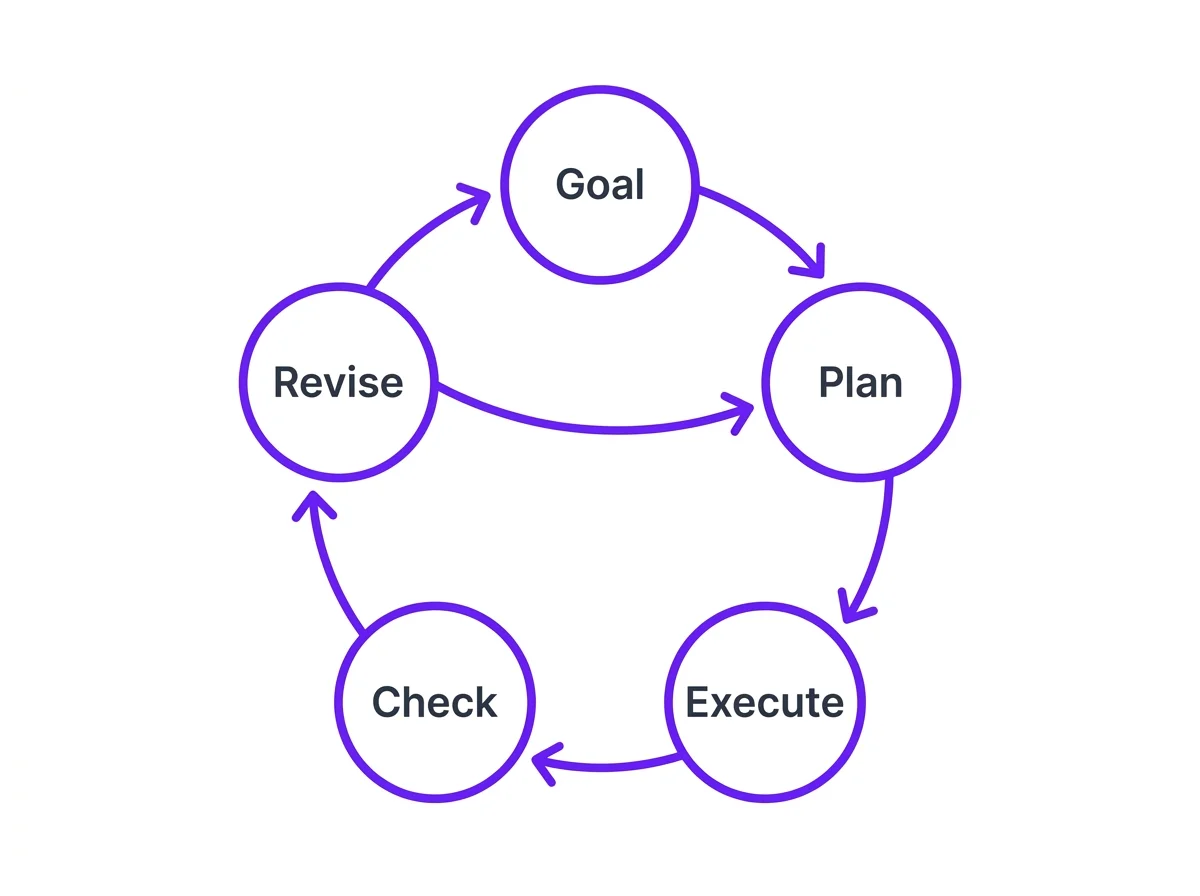
That is the planning loop. Goal, plan, execute, check, revise, repeat. The model does not memorize a script. It composes one on the fly for each job.
Planning is what makes an agent feel intentional instead of reactive. You give it the outcome you want. It works out the path. When the path bends, it bends with it.
Tools: What an Agent Can Actually Do
Without tools, an agent is just a smart chatbot. With tools, it can act.
Tools are the actions an agent can take on the world. Claude's tools, broadly:
- Built-in tools. Web search. Web fetch. Code execution in a sandbox. Image and chart generation.
- File system access. Read, edit, create, and move files in the workspace folder Claude is rooted into.
- Connectors. Notion, Google Drive, Slack, Gmail, Calendar, Asana, Linear, and a growing list. Claude Connectors get their own page.
- Skills. Clusters of instructions Claude loads when a specific job is on the table. Most are markdown. Some bundle scripts when the work needs them. Claude Skills are how you teach Claude new capabilities for your specific work.
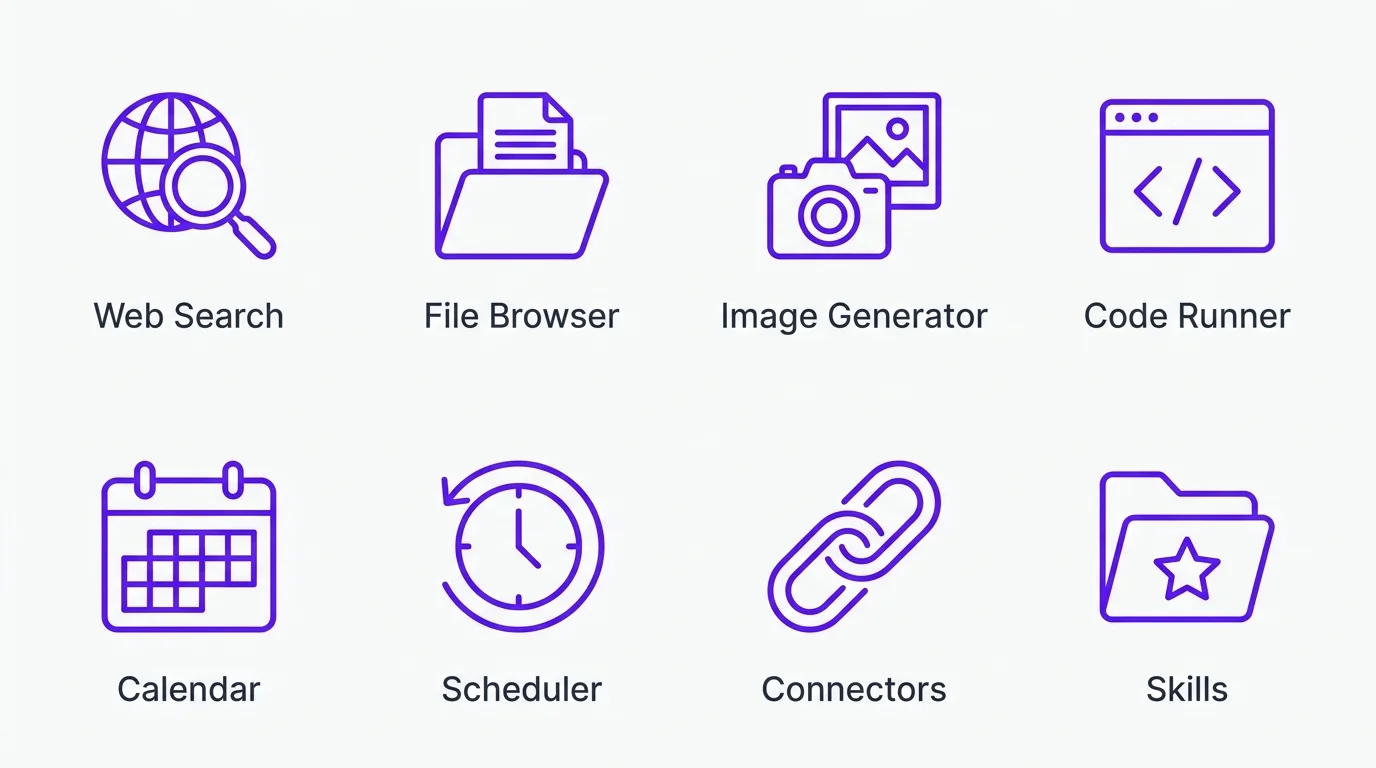
The list grows almost monthly. The important point is the shape of it. Tools turn the agent from a writer into a doer. Without that surface, the model can describe the work it would do. With that surface, the model just does the work.
Connectors: The Bridge to Your Other Apps
An agent can only reach what you connect it to.
We keep this section short on purpose. The Connectors page covers the four levels (native, desktop extension, Computer Use, MCP), the permission model, and which one you reach for in which situation.
Memory and Persistence: Agents Work Over Time
A chatbot forgets when the conversation ends. An agent does not.
Memory and persistence: how agents survive across sessions
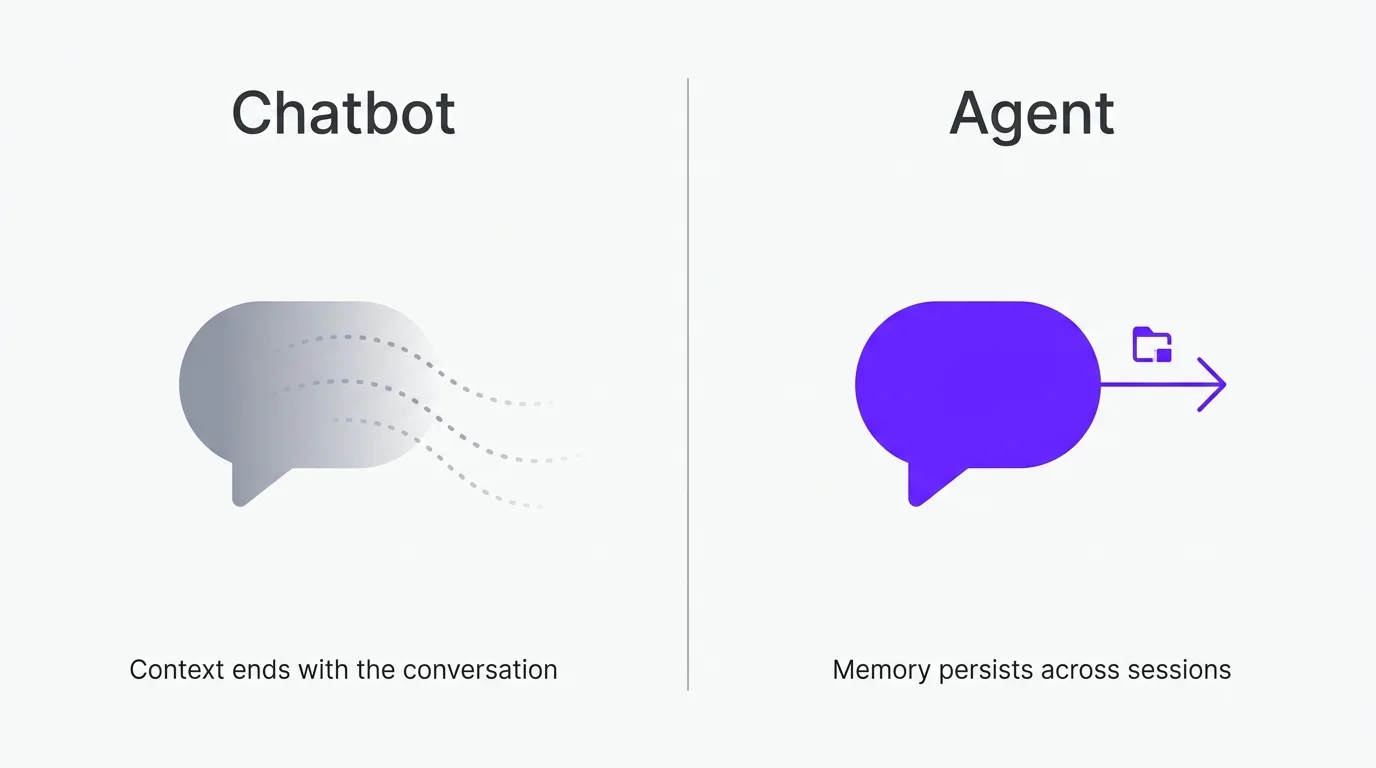
Memory is what an agent remembers. The CLAUDE.md file at the root of the workspace. Task-specific notes the agent wrote during the job. Files the agent created and parked in the right folder. The conversation so far.
Persistence is that the work itself survives. The agent is not just a session. It can pause, resume, restart, and pick up where it left off. The output is durable. The next session can find it.
Two different concepts. Memory is what survives. Persistence is that the work itself survives. Both are needed to make Claude feel like a teammate instead of a stranger you re-train every morning.
Scheduled and Long-Horizon Work
The thing that separates an agent from a chatbot is that an agent does not need you in the room.
You can tell Claude to draft your weekly newsletter every Sunday at 6pm. It opens at the scheduled time, pulls the inputs (your week's wins, the latest content, the open rate from last week), drafts the issue, and parks it in your folder for review. You wake up Monday to a draft, not a blank page.
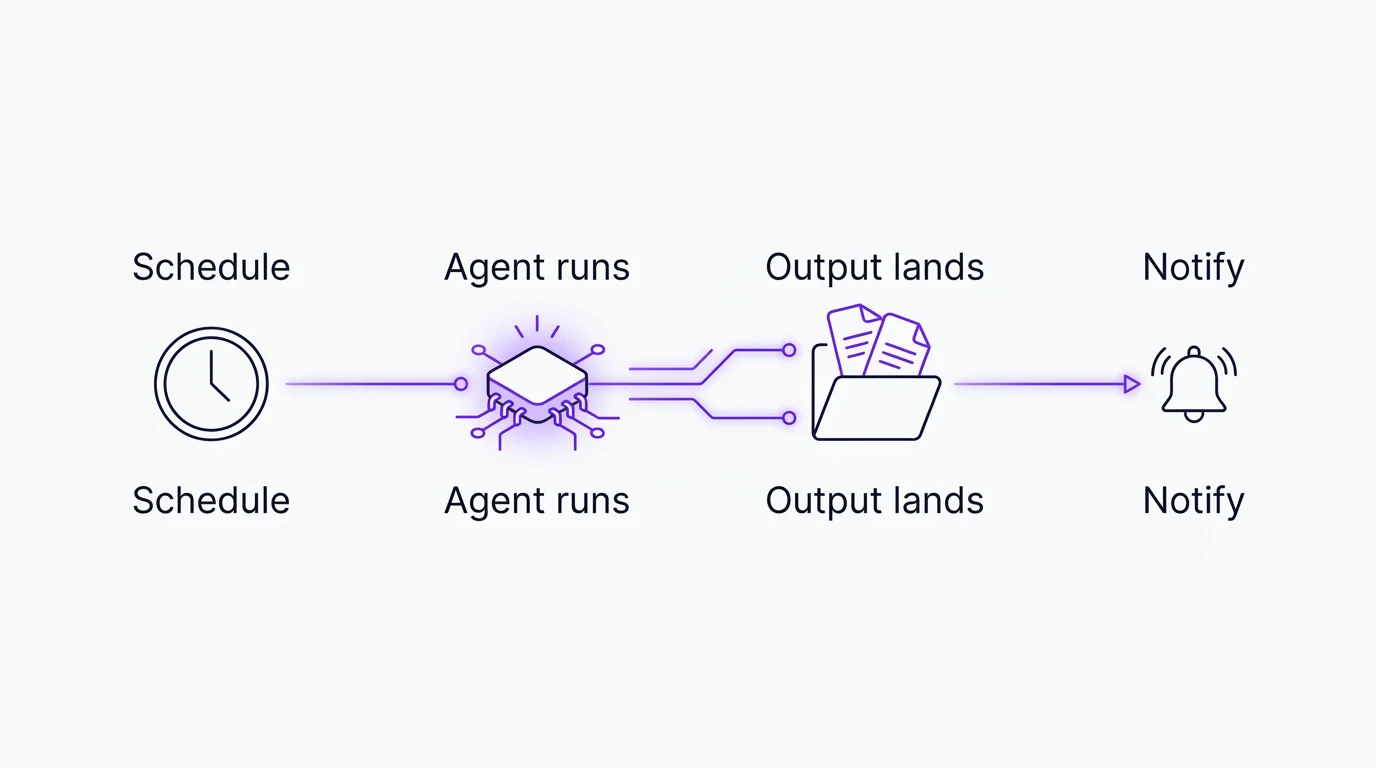
This is where context engineering, Skills, and Connectors compound. A scheduled job is just a Skill that runs on a clock. The Skill calls Connectors to pull the data it needs. CLAUDE.md tells Claude how to write in your voice. None of it requires you to be there.
Scheduling turns an agent from a tool you call into a teammate who shows up.
The Most Significant Innovation: Skills
Of all the things that make Claude agentic, the most consequential is Skills.
Skills are how you give Claude new capabilities without writing code. They are folders of instructions Claude loads when the work calls for them. They are debuggable, portable, shareable, and stackable in ways no prior AI capability has been.
Russ frames it this way: the SKILL.md file is to Claude what the link graph was to Google. The structural piece that made everything else compound. Search worked before PageRank. It got useful after. AI worked before Skills. It gets useful after.
What You Have When This Phase Is Done
A mental model of the four agent traits and the loop they run in. The test for agent versus chatbot work. A specific scheduled job picked out for your business. Phase 3 (Skills) is how you build the capability the scheduled job will actually use.
Try a Claude Agent on Real Work
You can read about agents for another week. Or you can install a working Claude Cowork workspace, point it at a real piece of your business, and watch the four traits show up in your own files tonight.