

TLDR:
- Visa, Mastercard, Stripe, Microsoft, Meta, Google, OpenAI, and PayPal are all racing to build the same thing: a commerce internet where the buyer's agent arrives with intent already formed.
- The top of the funnel is already gone. AI took over awareness and research. Agents are now moving down into consideration and conversion.
- Buying becomes more rational. Headlines, fascination bullets, and hero design lose their grip on a buyer that doesn't have feelings.
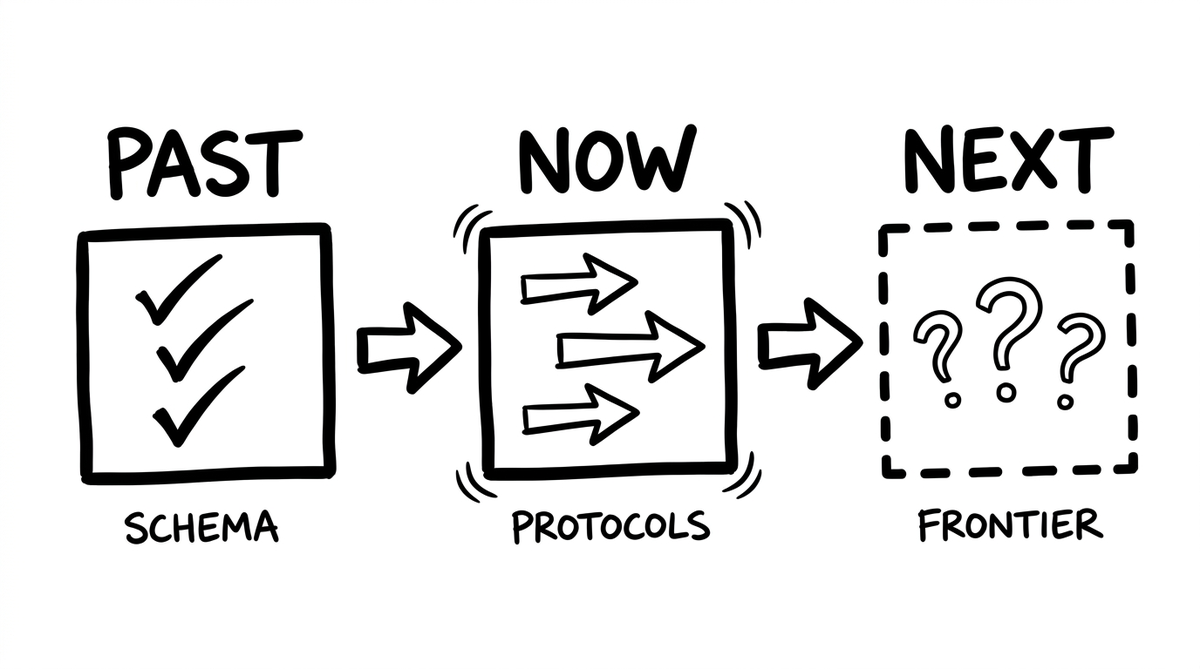
- Three tiers of what to do: what's already here, what's arriving now, and what might be coming.
- The 30-minute audit at the end gives you a prompt you can paste into your own AI to grade your business.
Your funnel is a persuasion machine.
When AI agents start handling buying decisions, the seller-controlled environment that powered marketing for two decades collapses. Buying becomes rational. A lot of marketing budgets are about to look very different.
This article breaks down:
- The race nobody is branding as one race
- Why the top of the funnel is already gone
- Why buying is becoming rational
- The three tiers of what's replacing the funnel
- A 30-minute prompt you can give your own AI
The Agentic Commerce Race Is On
Stripe Sessions 2026 shipped 288 product launches in April. Link Wallet for agents. The Machine Payments Protocol. The Agentic Commerce Suite. Streaming payments through Metronome and Tempo. Radar token-theft defenses.
That's one company.
Visa is building agent payment systems. Mastercard is too. Microsoft is pushing shopping inside Copilot. Meta is moving checkout closer to ads. Google rolled out the Universal Commerce Protocol with Etsy and Wayfair. OpenAI co-developed the Agentic Commerce Protocol with Stripe. PayPal is in.
Eight of the biggest names in the commercial internet are racing to the same finish line.
Nobody is branding it as one race yet. So if you feel like you missed the memo, you didn't.
The finish line: a world where the buyer's agent arrives with intent, context, permissions, and sometimes payment authority before the seller ever gets a chance to convert anyone.
Same buyer. Different decision-maker.
The Top of the Funnel Is Already Gone
The funnel was never just a marketing diagram. It was an institutional arrangement for making human intent observable.
Awareness. Consideration. Conversion. Retention.
That whole vocabulary existed because the buyer was a person walking through a seller-controlled environment. Pricing pages, landing pages, demo flows, onboarding. Those were instruments for watching demand take shape. Scott Brinker's MarTech landscape ballooned past 8,000 companies because every one of them assumed the buyer would eventually arrive on a seller's surface.
Agents skip the surface.
Awareness is already gone.
Cognism's Inside Inbound 2026 report showed organic traffic for B2B companies dropped 33.6% year over year. Direct marketing-qualified leads grew 6%. Translation: buyers are doing their research off-site (with AI), then returning to brands they already trust.
Now agents are moving down the funnel. Consideration is next. Conversion follows.
The funnel isn't dead. We're using funnels everywhere still. What's true is that the change is happening slow enough that most businesses won't notice, and fast enough that it'll matter a lot that they didn't notice.
That gap is the whole game.
Buying Is Becoming Rational
A person tolerates ambiguity. A person infers from aesthetics. A person reads five reviews and decides something seems fine. A person can be moved by urgency, scarcity, FOMO, and a clever headline at 11pm on a Tuesday.
An agent doesn't do any of that.
Agents don't read fascination bullets and feel a tug. They don't get hooked by a headline. They don't watch a hero video and decide the brand "feels premium." They don't get exhausted at midnight and add to cart.
They scan. They compare. They decide.
The agent needs the business to be legible enough to operate against. Once it has that, the emotional choppiness that has shaped commerce into a thing marketers feel comfortable with starts to flatten out.
Long-term, the internet economy becomes a more efficient market.
That's bad news for businesses that have survived on persuasion rather than substance. The "rank for the keyword and pray our copy hooks them" model dies. So does the "hero image makes us look bigger than we actually are" model. So does the manufactured-urgency-at-checkout model.
It's good news for businesses with genuine quality, clear policies, real reputation, and high-trust experiences. Those become reliable preferences.
A huge chunk of what brands have been charging as a brand premium was actually a persuasion premium. Agents will expense it.
What's left is real reputation. Real fulfillment. Real trust. Things you have to earn the slow way.
The Three Tiers
Two questions every business owner should answer this year:
- Can a buyer's agent be told "buy from this company" and actually complete the task?
- Can a buyer's agent compare you fairly against alternatives and walk away with a clear answer?
If those answers aren't both "yes," there's work to do.
Don't try to absorb everything at once. Use a confidence ladder.
Three Tiers of Agent-Readable Infrastructure
| Tier 1: What's Been Here | Tier 2: What's Arriving Now | Tier 3: What Might Be Coming | |
|---|---|---|---|
| Examples | Schema.org, Google Business Profile, product feeds | ACP, UCP, MCP, Stripe Link Wallet | Machine-readable policies, verifiable identity, outcome-based pricing |
| Status | Mature, broadly adopted | Real and shipping | Speculative, worth watching |
| What to do today | Get the floor in if you haven't | Integrate when your platform supports it | Watch and learn. Don't bet the farm. |
Tier 1. What's Been Here For a Long Time.
Mature. Adopted. Already on your plate (or it should be).
- Schema.org structured data. Service, Organization, FAQ, Review, Course, Event. Google's been ranking on this for years. This is the floor.
- Clean local presence. Google Business Profile, Apple Maps, Bing Local with consistent name, address, phone. The OS-level agents read these directly.
- Product feeds if you sell physical goods.
If you don't have these, no amount of agent-protocol futurism will help. Get the floor in.
Tier 2. What's Arriving Now.
Real and shipping. Pay attention.
- Agentic Commerce Protocol (ACP). OpenAI and Stripe co-developed. Etsy, Shopify, and 25-plus partners are integrating.
- Universal Commerce Protocol (UCP). Google's version. Etsy and Wayfair launched on it. Adds attributes like compatible accessories, substitutes, and Q&A data.
- Machine Payments Protocol + Stripe Link Wallet for agents. Lets an agent transact without seeing your raw payment credentials.
- Model Context Protocol (MCP). Anthropic-driven, broader than commerce. Lets an agent actually call your tools and APIs. The technical play. Big advantage for the few who set one up.
If you sell to consumers or run an e-commerce store, ACP and UCP will probably show up on your platform within the next year. Don't be the last to flip the switch.
Tier 3. What Might Be Coming.
Speculative. Worth watching. Don't bet the farm.
- Machine-readable policies. Returns, cancellation, recourse, identity. Today they're buried in a footer. Tomorrow they're structured fields an agent can read like a price tag. Imagine an agent saying "I'd buy from this vendor but their refund window is 7 days, and the buyer's tolerance is 30." That's where this is going.
- Verifiable merchant identity and reputation portability. Cryptographic proofs of business identity. Agent-readable history: "this agent has bought from this merchant 14 times successfully." Stripe Signals is a first move.
- Outcome-based pricing protocols. Pay when the qualified lead arrives. Pay when the booking confirms. Pay when the support ticket resolves. Stripe's streaming payments and Metronome are the early plumbing.
- The preference-layer streaming wars. Where does the agent learn that you prefer 49th Parallel coffee over Folger's? Apple Intelligence has ambient access. Microsoft Copilot reads your work. Google Gemini sees your search and Gmail. ChatGPT and Claude have memory features. Stripe Link knows what you bought. None of these wins outright. Expect a streaming-wars dynamic with deals struck between platforms.
Don't pick a winner. Pay attention to who's making deals.
Stop Doing These
If you're spending hours per week on any of the following, that energy is better spent elsewhere.
- Writing 101-style awareness content. Wikipedia clones aimed at a single keyword. Agents will paraphrase Wikipedia, not your blog.
- Persuasion-premium copy. Manufactured urgency. Cute hooks with no substance. Emotional pacing without a real point.
- Treating Google search as the only discovery channel. It's becoming one of several.
- Hiding the offer behind a sales pitch. If an agent (or a human in a hurry) lands on your page and can't tell what you actually sell, who it's for, and what it costs in 10 seconds, you lose.
- Performance pages that exist to make people feel something but don't tell anyone what you actually do.
The 30-Minute Audit
Stop reading your own page. Your own eyes will fill in the gaps that aren't actually on the page. An agent won't.
Open ChatGPT, Claude, or Gemini. Paste this prompt in. Replace the two URLs with your homepage and one primary service or product page.
Visit these two pages on my website:
1. [your homepage URL]
2. [one primary service or product page URL]

Pretend you are an AI buying agent. A user has told you to evaluate
this business on their behalf. Read both pages carefully. Then
answer these six questions using ONLY information that is actually
on the pages. If the answer isn't on the page, say "not on the page."

1. What does this business sell?
2. Who is it for?
3. What does it cost?
4. What does the buyer get?
5. What happens after they buy?
6. What is the cancellation or refund policy?

After you answer, tell me:
- Which of the six questions you could not answer from the pages.
- The two pieces of information that, if added, would most improve
  your ability to recommend this business to a user.
- Any place where the page tries to persuade rather than inform.
Run it. Read what comes back without flinching.
Most solopreneurs fail this audit on at least three of the six. That's not a roast. That's a starting point.
Whatever the AI says it couldn't find, fix that one first. Then run the prompt again next week.
The Bigger Picture
The website doesn't disappear. Human buying doesn't disappear. Brand and design don't disappear.
What disappears is the assumption that a seller can shape the buying journey just by owning the surface.
This is what painting the Golden Gate Bridge is like. By the time you finish painting it, you start over. The whole internet flips again. Last time it was mobile. Time before, social. Time before that, search. Now agents.
For the early movers paying attention, this is one of the most exciting moments in years. There are trillion-dollar markets that need to get rebuilt for the agent economy. Whole categories of software are about to be reinvented. Solo founders who watch closely and adjust early get the advantage that big companies (with their MarTech debt and their persuasion-premium copywriters) are going to spend the next five years catching up to.
You don't have to retool everything tomorrow. You do have to start.
Run the prompt. Fix what it surfaces. Do it again next month.